
Arabic Language Day: Celebrating a Global Language on December 18
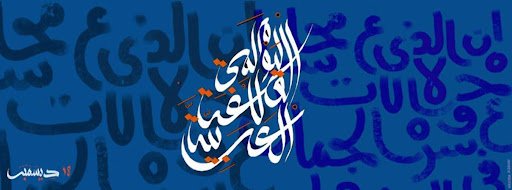
By Tunisian calligrapher Karim Jabari
Photo:© UNESCO
Every year on December 18, the United Nations marks Arabic Language Day, a celebration dedicated to one of the world’s most widely spoken and culturally rich languages. The observance highlights Arabic’s historical depth, its contemporary relevance, and its vital role in fostering dialogue among peoples and cultures.
The date is significant. On December 18, 1973, the United Nations General Assembly adopted Arabic as one of its six official languages, alongside English, French, Spanish, Russian, and Chinese. Nearly four decades later, in 2012, the UN formally designated this date as Arabic Language Day to honor the language’s contribution to global communication, knowledge, and cultural diversity.
A Language with Deep Roots and Global Reach
Arabic is spoken by more than 400 million people across the Middle East, North Africa, and beyond, making it one of the most widely used languages in the world. It also holds a unique status as the liturgical language of Islam, connecting over a billion Muslims to religious texts and traditions regardless of their native tongue. The Quran, the holy book of Muslim, was revealed in Arabic.
What distinguishes Arabic is not only the number of its speakers, but also its extraordinary continuity. Classical Arabic texts, some more than a thousand years old, remain accessible to modern readers, while contemporary dialects continue to evolve in vibrant and diverse ways. This balance between tradition and innovation is a defining feature of the language.
Arabic’s Contribution to Human Civilization
Arabic has played a pivotal role in the transmission of knowledge across civilizations. During the Golden Age of Islamic civilization, Arabic was the primary language of science, medicine, mathematics, philosophy, and astronomy. Works by scholars such as Al-Khwarizmi, Ibn Sina (Avicenna), and Al-Farabi were written in Arabic and later translated into Latin, profoundly influencing the European Renaissance.
Many everyday words in English and other languages—such as algebra, algorithm, coffee, sugar, and zenith—have Arabic origins, reflecting centuries of cultural and intellectual exchange.
Language, Identity, and Cultural Diversity
The United Nations’ recognition of Arabic Language Day underscores the broader principle of linguistic diversity as a cornerstone of cultural identity and mutual understanding. Languages are not merely tools of communication; they carry values, worldviews, and collective memory.
Arabic, with its rich literary heritage of poetry, prose, and storytelling, has long served as a medium for expressing ideas of love, justice, faith, and resistance. From pre-Islamic poetry and classical prose to modern novels and digital media, Arabic continues to shape cultural expression across regions and generations.
Arabic at the United Nations
As one of the UN’s official languages, Arabic is used in official documents, meetings, and simultaneous interpretation, ensuring that millions of Arabic speakers can engage directly with international diplomacy and global decision-making. This inclusion reflects the UN’s commitment to equitable representation and accessibility.
Each year, UN offices around the world commemorate Arabic Language Day through lectures, cultural performances, calligraphy exhibitions, poetry readings, and panel discussions. These events not only celebrate the language itself but also promote intercultural dialogue and respect.
Relevance in the Modern World
In today’s interconnected world, Arabic remains strategically and culturally significant. It is the language of rapidly growing media markets, dynamic youth populations, and expanding digital content. At the same time, efforts to promote Arabic education, translation, and technological adaptation—such as Arabic-language artificial intelligence and online resources—are shaping its future.
Arabic Language Day serves as a reminder that preserving and promoting languages is essential in an era of globalization, where linguistic homogenization can threaten cultural diversity.
A Celebration Beyond Words
Ultimately, the United Nations’ designation of December 18 as Arabic Language Day is more than a symbolic gesture. It is an invitation to appreciate the power of language as a bridge between cultures, a repository of human knowledge, and a living expression of identity.
By celebrating Arabic, the international community affirms a broader commitment to multilingualism, mutual respect, and the idea that the world’s linguistic diversity is not a barrier—but a shared heritage worth protecting and celebrating.
References
https://www.un.org/en/observances/arabiclanguageday